Forrest Gump

Forrest Gump is a classic movie. Tom Hanks does a remarkable job portraying a character that is viewed as different from most people but the person is still relatable. I have seen the movie dozens of times and did not know until a few years ago that it is based off a book, of the same name, by Winston Groom. My first time reading the book was for this blog.
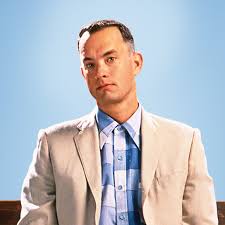
Comparing this book and movie was different than comparing other books adapted into films because there were so many differences.
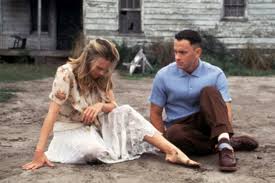
Possibly one of the most notable differences is how Forrest and Jenny’s relationship is established and continued. In both versions of the story they meet when they are about six years old in the first grade. In the book, they do not go to school together again until high school. However in the movie, they go to school together all the way through senior year of high school. There relationship is a bit more consistent in the story after they graduate. While in the book they go to the same college and in the film they do not, they have a tendency to go down different paths with their lives. Ultimately Forrest still manages to find Jenny and stay with her for a while until they drift apart again. This pattern continues throughout the majority of the book and film.
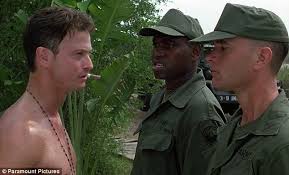
In addition to his relationship with Jenny being different, Forrest’s relationships with Bubba and Lieutenant Dan also change from the book to the movie. In the book, Forrest and Bubba meet because they live in the same college dorm. In the film, they meet on their way to training for the Army before going to Vietnam. In the movie, Forrest meets Lieutenant Dan when he and Bubba arrive at base camp in Vietnam. However, in the book, Forrest meets the lieutenant in the hospital in Vietnam after he has been wounded and taken out of the battle. Notably, Bubba has already died at this point of the book so he and Lieutenant Dan never meet. The most important thing to remember about these changes is that they do not change the effects Bubba and Dan had on Forrest. Bubba still teaches Forrest quite a bit, is one of his best friends, and is the reason Forrest got into the shrimp business. Lieutenant Dan still becomes a crippled veteran, has a pessimistic outlook on life, still cares greatly for Forrest, and ultimately helps him with his shrimp business.

Another difference between the book and movie is the scenes portrayed in each. The book seems to have a lot more than the movie and they come across as more outlandish. For instance, at one point in his life, Forrest is arrested during a protest but instead of serving time in prison he is sent to a psychiatric hospital. After doctors do tests with Forrest, they send him to NASA where he is put on a mission with an astronaut and an orangutan. After their space shuttle crashes in a jungle, the three of them spend years with native people until NASA comes to their rescue. It is well-known that books have more content than their film counterparts. Like Lev Grossman says in his article, The Screen’s the Limit, “Most novels have too much plot in them to comfortably become movies. They’re just not meant to be consumed in a single setting”. This is a true statement particularly for Forrest Gump. Being over two-hundred pages long and having a multitude of unusual scenes and many references to historical events, there is too much content to put every detail in the movie.
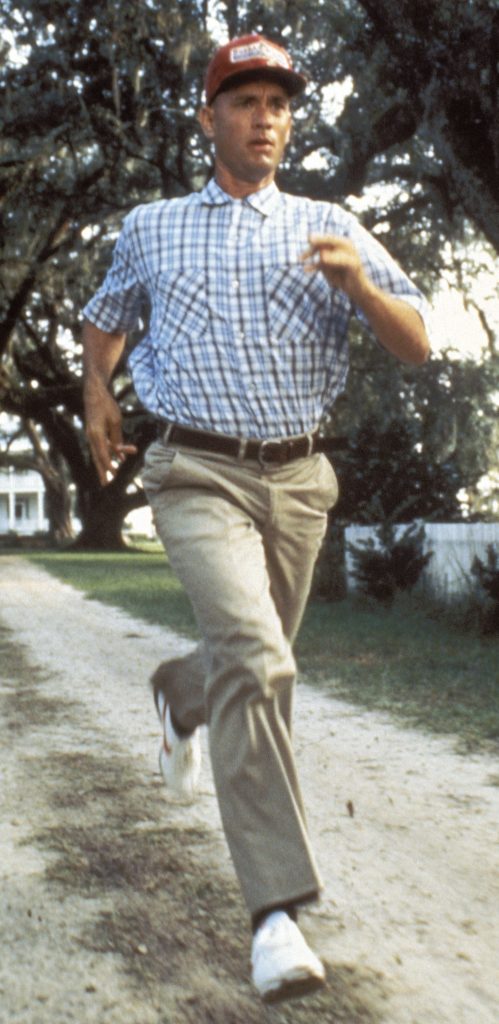
The movie does have some scenes that are not part of the book. The famous running scene is an example. In the movie, after Jenny leaves Forrest and his house, he decides to run and ends up running for years across America. While Forrest’s superior running ability is a pivotal part of the book, there is no scene where he runs from coast to coast. There are other scenes in the book that seem to be there only to show Forrest interacting with significant parts of history. Some of these include the first African-American students to attend the University of Alabama and the Watergate scandal.
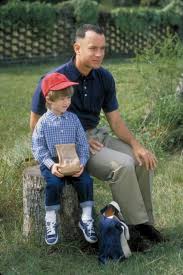
With all of these alterations, some of the most memorable changes are associated with Forrest’s family. The movie shows that Forrest returns home abruptly because his mother is sick. It is revealed that she has cancer and dies shortly after Forrest comes home. In the book, she does not die and in fact helps him with his shrimp company. Jenny also dies in the movie. After she and Forrest get married, she gets very sick and dies at the Gump estate. In the book she does not die. In fact, she also does not marry Forrest and the son that she introduces him to is not his son. In the movie Jenny invites Forrest to come see her in Savannah, Georgia where she introduces him to their son, Forrest Jr. Then they go back to Alabama where they get married, Jenny dies, and Forrest raises their son. In the book, Jenny and Forrest happen to be in Savannah at the same time and Jenny is with her son. She tells Forrest about her son’s father, a man that she is engaged to be wed. While none of these differences in character endings have a major affect on the story line of the book, they did feel odd to me. As someone that has grown up watching Forrest Gump and knowing that his mom dies, he marries Jenny, she dies, and they had a son, it took me by surprise that none of this was in the original story. Fortunately Forrest’s character remained the same in both versions.

In fact, none of the changes from book to film changed the overall purpose of the story. While there are some very clear differences, many of which I did not discuss, Forrest Gump remained a thoughtful, caring, and loving person. He managed to get himself into some unique and challenging situations but always did what he felt was right.
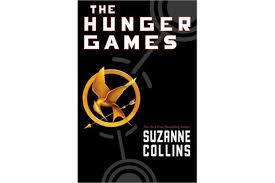
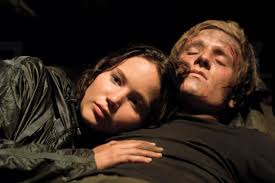
The Hunger Games

The Hunger Games is one of my favorite books and films. I have read and watched it many times and I still find the story compelling. For young readers and movie fans, the story is familiar. Katniss is a sixteen-year-old girl that lives in a post-war world. Every year her country selects twenty-four children from the ages of twelve to eighteen to compete in a battle to the death, The Hunger Games. Katniss becomes one of the tributes and is thrust into an unfamiliar world where she has to learn how to survive in order to return home. This is a fascinating story and remains fairly consistent from book to film. Needless to say, there are differences as there are with all adaptations.

Unless you are a big fan of the book and movie or you have read and watched them back-to-back, the differences are not obvious. For the most part, the characters are the same, most of the scenes are consistent, and the end result is the same.

As a fan and someone that watched the movie immediately after reading the book, I noticed differences in Katniss’ personality. In the movie she is shown as someone that is almost always serious unless you know her very well and she wants you to see something other than her stern side. She breaks this seriousness when she is with her sister Prim, her best friend Gale, somewhat with her stylist Cinna, and eventually with her partner and love interest Peeta. When she is with them, she is more honest and vulnerable but it is still not complete vulnerability. There are parts of the book where Katniss seems weak, young, and vulnerable, even around people aside those I just listed. Even though I have read the book more than I have seen the movie, Katniss feeling weak, young, and more vulnerable seems out of place. The portrayal of her in the film makes it more believable that she will do whatever it takes to not be changed by participating in The Hunger Games and get back to her home.

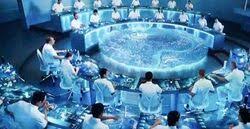
Another noticeable difference between the book and movie is something that anyone that has read and watched both probably was aware of. In the film, there were many cuts between what Katniss was doing and what the game makers were doing. As Gary Ross said in Controlling the Games, a bonus feature of the 2015 DVD boxed set of all The Hunger Games movies, “I don’t have the ability to go inside Katniss’ head and show her speculation about what the game makers were doing to her. But I do have the ability to cut away in a way that the novel doesn’t because it’s first person”. The book has a large amount of text that is what Katniss is thinking. As Anne Zahlan explains in her article, From Text(s) to Screehttp://webcontent.heartland.edu:2048/login?url=http://search.ebscohost.com/login.aspx?direct=true&db=a9h&AN=137067096&site=ehost-liven: Adapting Genius, “description, narration, and represented thoughts must be transcoded into speech, actions, sounds, and visual images.” A director and screenwriter have to be creative about how to show what a character is thinking. Sometimes that means turning their thoughts into a monologue or a conversation. In this case with Katniss and the evolution of the arena, this meant going back and forth from the arena to the room in which the game makers worked. While this was an obvious difference from the book, it was tied in well with the story line.

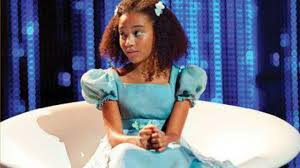
There are also smaller differences from the book to film. One of these is outfit changes. In the book, Katniss and Peeta are the only two tributes to show up to training on the first day in the same outfit. When the training sequence is shown in the movie, all of the tributes are wearing the same outfit but they have their own district’s number on the sleeves. There are also differences with some of the outfits tributes wear for their interviews. Rue wears a dress with wings in the book. However, she has no wings in the film. The female tribute from district one wears a long see-through gown in the book but in the movie she wears a short, pink dress with a multi-layered skirt. None of these changes altered the plot line, but the outfits in the book all seem simple enough to be copied in the film.

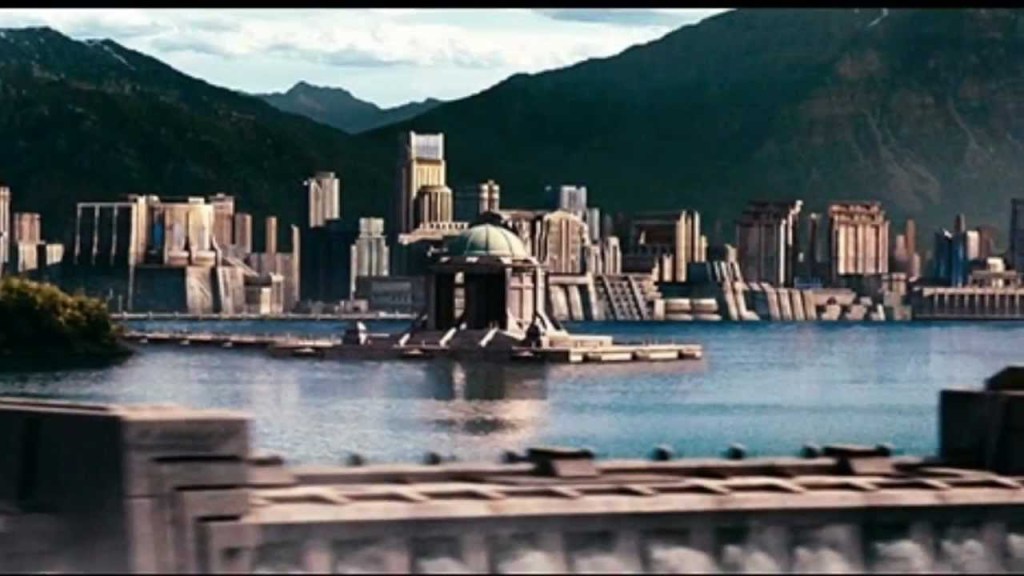
Of course there are other differences such as not showing every character mentioned in the book, such as Madge and the baker, excluding smaller plot lines, such as how Katniss’ father taught her to hunt, that would have made the movie longer than could be permitted, and elaborations on environments, such as how different the Capitol is from the districts and Katniss’ home.

Even though there were alterations made from the book in order to make the film, both works are wonderful and ultimately tell the same story. The objectives of characters never changed and the endings were the same.

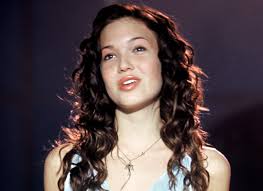
A Walk to Remember

I have seen the movie A Walk to Remember multiple times prior to working on this project but I had not read the book. I was skeptical of reading the book because I usually do not like Nicholas Sparks’ stories. I find them fairly repetitive. However, I have always loved the movie. As I read the book, I quickly discovered how much I like it as well. To say which one I like more is hard because they are very similar and they were both created well.

One of the most obvious similarities is that the main and secondary characters have the same names and are generally portrayed with the same characteristics. Those characters are: Landon Carter, Jamie Sullivan, Pastor Hegbert Sullivan, Eric Hunter, Worth Carter, and Mrs. Carter. There are other characters from the film that seem to portray characters from the novel. For instance, Belinda has similarities in role and personality to the book’s Angela Carter. The character Dean from the movie is similar, albeit more pleasant, to the book’s character Lew.

Another important similarity between the book and film is that the plot line is generally the same and the message of the story remains consistent and identical. The general plot line is that Landon is a high school senior that truly is a good person but he makes poor choices and this causes some people in his community view him as a bad person. Jamie, also a senior in the same school as Landon, is a good person that does anything she can to help other people. She generally sees the good in other people and has a strong faith in God. Landon and Jamie have known each other for practically their entire lives but only start spending time together during senior year. One of the activities they do together is the school play. They are cast in the lead roles. Through preparation for the play, they get to know each other more and start to date and eventually fall in love. Landon is becoming a better person because of Jamie. She tells him that she has leukemia. He starts doing everything he can to help her get better and ultimately realizes that he wants to marry her. They do end up getting married at the end of high school and they are married until Jamie dies. The message that is consistent with both versions of the story is that people change each other for the better and sometimes life is not fair, but your outlook on life is based on how you deal with your circumstances. As Emilee White says in her article Taking ‘different steps’, “You can go through the same journey as the book, but you have to take different steps”. While Landon and Jamie may have not done everything exactly the same as they did in the book, their actions in the film still brought them to the same end result.

There are some noticeable differences between the book and film. One of the more obvious ones is the time difference. In the book, Landon and Jamie finish high school in 1959. In the film, they are finishing high school in the 1990’s. Adam Shankman, the director of the film, explains this change in his commentary with Shane West and Mandy Moore on the 2007 version of the DVD. Shankman says that the creators wanted the film to be relatable to a wider audience so they made the film take place in what was modern day.

Another clear difference between the book and movie is that much of the dialogue is different but it still conveys the same story. Changing dialogue is to be expected when adapting a book into a film due to the time constraints of a movie, the screenwriter making decisions about what should stay, and actors’ choices on whether or not to improvise lines, so long as the director, producer, and screenwriter permit the improvisation.

Another memorable difference between the book and film is that the play in the book is a Christmas one that Hegbert Sullivan writes. The play in the movie is about a club owner and a singer that is hired to work at the club. That play is written by one the high school students. Nicholas Sparks, author of the novel, explains in a commentary on the 2007 edition of the DVD that the Christmas play is about a father that struggles to be a good one to his daughter. In the movie, Hegbert was to be portrayed as a good father. Since the Christmas play represents Hegbert’s struggles after his wife dies, the plot of the play was altered. Using the Christmas play would have also required a sub-plot that the movie did not have enough time to show.

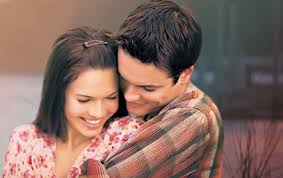
There are also some subtle differences between the book and film that may only be noticeable if you read and watch them back-to-back like I did. In the book, Jamie always wears her hair in a tight bun except for the play, the wedding, and the days that she feels comfortable around Landon. In the book she does the same behavior but her go-to hair style is a ponytail. Shankman explains that this was chosen since ponytails were so popular in the 1990’s. Jamie’s hair in the book is blonde but in the film it is brunette. This is one difference I did not understand because in the commentary, Moore says that they dyed her hair from blonde to brunette for the film. Another difference that did have a small effect on the film’s plot line is the change in Worth Carter. In the book, he is still married to Landon’s mother and he is a politician in Washington D.C so he spends a lot of time away from his wife and son. In the film, Landon’s parents are divorced, he lives in a different town, and he is a cardiologist. While the severance of Landon’s relationship with his father exists in both versions, it is for different reasons. On a commentary for the 2007 DVD, screenwriter Karen Janszen explains that the change was done to make the divide of the family more modern and relatable.

I could make an exhaustive list of all the differences between the book and movie for A Walk to Remember but that is not necessary. When comparing the two works, the most important thing to keep in mind is that neither of them has a negative effect on the other. The book is compelling and heartwarming. The film is as well and does not ruin the story. Each piece can even make someone want to read or watch the other. Watching the movie is one of the reasons I wanted to read the book. I am glad I did. I appreciate both of them for the individual projects they are and that they can support each other at the same time.

Design a site like this with WordPress.com
Get started